Recently, we visited a homeowner in Dunedin, Florida, whose lawn was showing significant signs of decline. Large patches of grass had died off, weeds were growing prolifically, and different grass species were competing throughout the property. The remaining St. Augustine was struggling to establish healthy, consistent coverage.
As we walked the property, we noticed how different the conditions were from one area to another. Some spots were dry and covered in thatch, while others had become overrun with crabgrass, sedges, lilac tassleflower, Spanish needles, and Bermuda grass. These plants can offer clues about the conditions they're growing in, so we documented them alongside the declining turf.
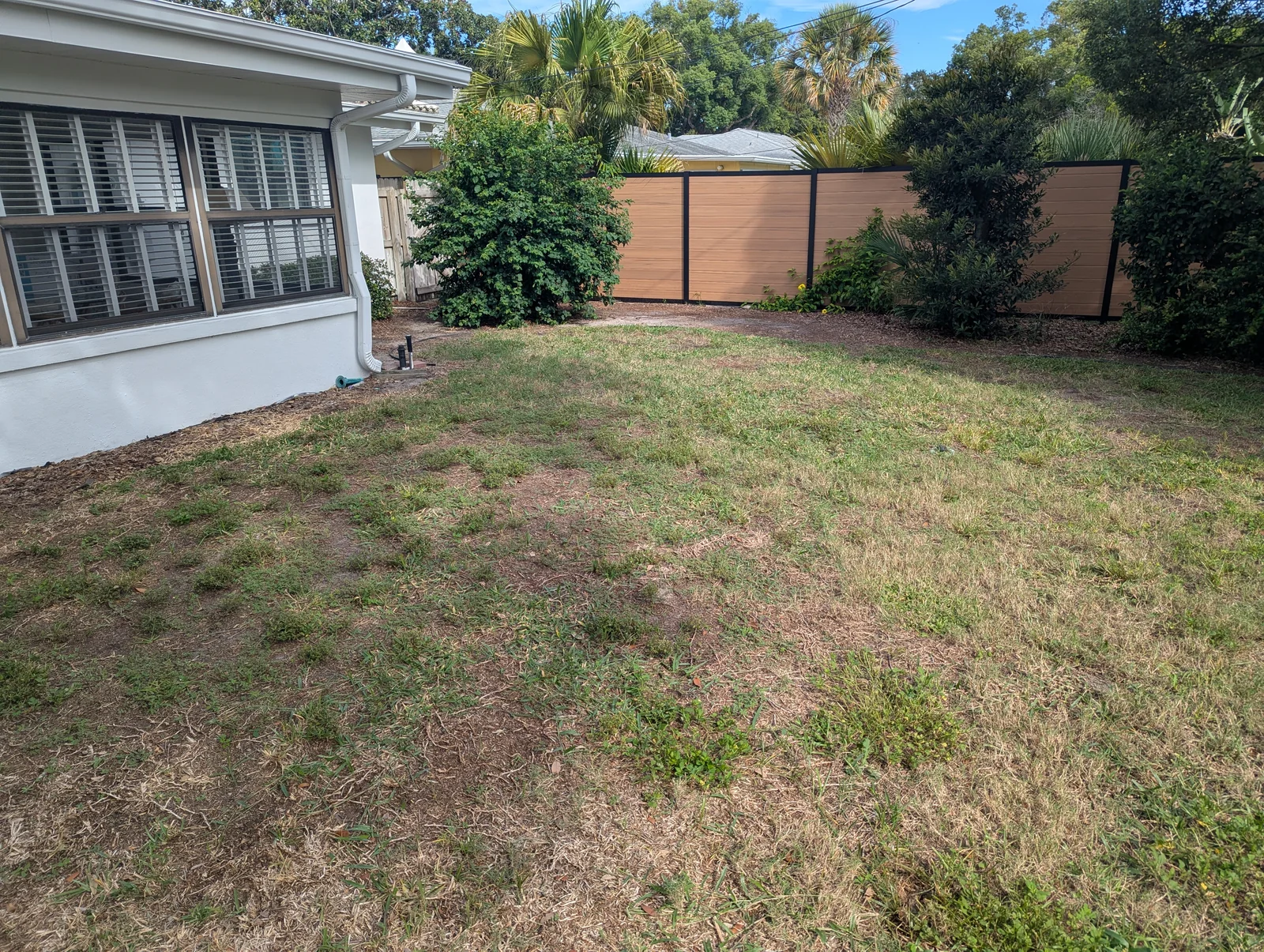
We selected six locations throughout the front and backyard to investigate further. At each location, we examined soil nutrients, pH, moisture, compaction, organic matter, and microbial activity. By testing multiple locations, we can understand whether problems are affecting the entire property or are specific to certain areas.
What We Discovered
Across the property, we found acidic soil, consistently low potassium, and elevated phosphorus and magnesium. Much of the soil was extremely sandy, making it difficult to retain moisture and nutrients.
What made the results particularly interesting was how much conditions varied between locations. One backyard area had phosphorus readings significantly higher than the rest of the property, while another contained 10% organic matter compared to just 1% in a nearby low spot. Despite these differences, both areas were struggling to support healthy grass.
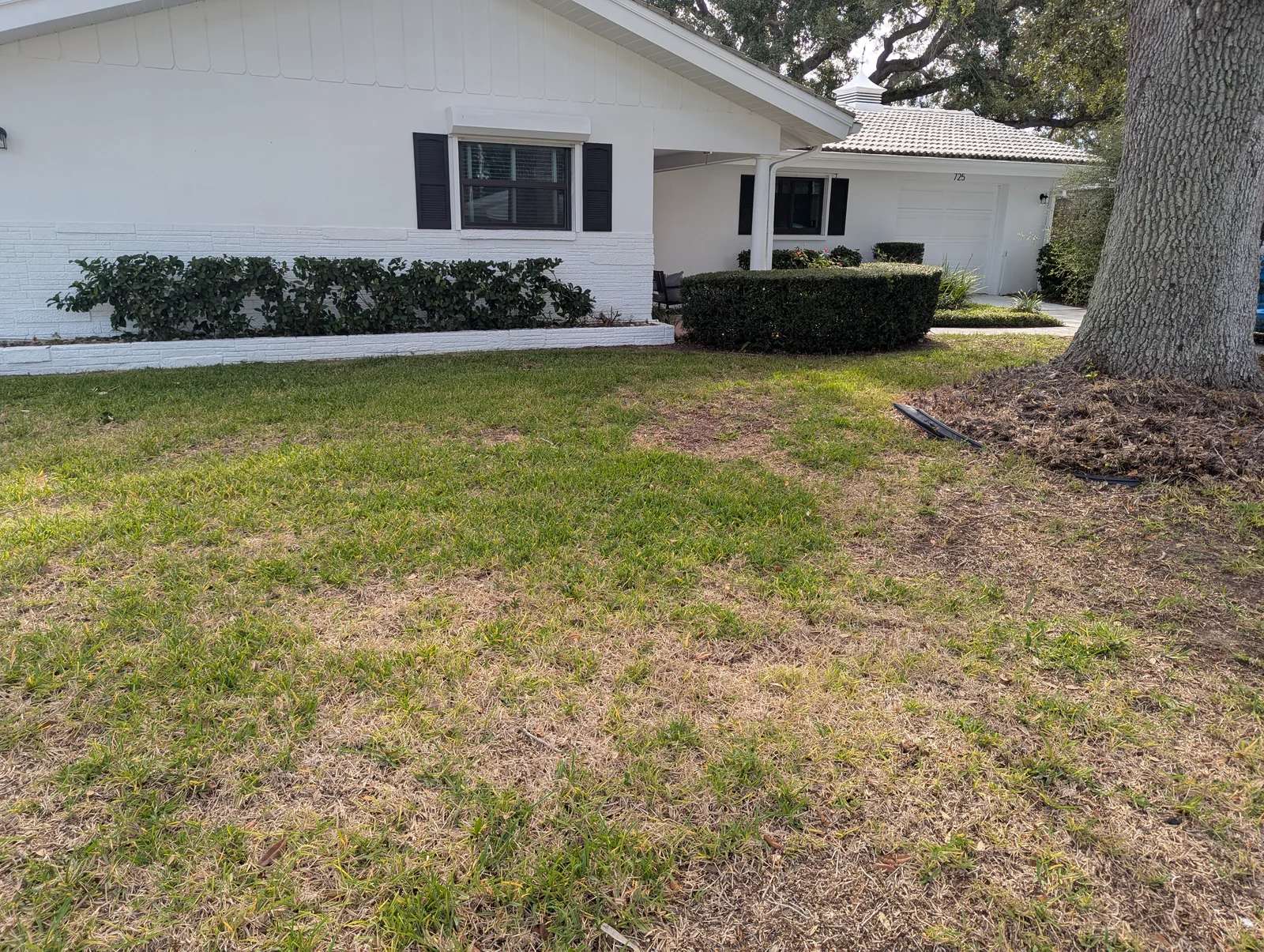
We also encountered restrictive soil layers at varying depths and found possible signs of fungal disease near one of the dead patches.
The results showed us that the lawn's decline wasn't necessarily caused by one problem, but rather several overlapping conditions affecting how well the grass could grow.
Our Recommendations
Rather than immediately replacing the dead grass, we recommended improving the conditions that contributed to its decline.
Our approach focused on incorporating biochar into renovated areas to improve moisture and nutrient retention, using small amounts of mature, low-phosphorus compost where organic matter was limited, and addressing potassium deficiencies without adding more phosphorus or magnesium.
We also recommended improving irrigation consistency, removing competing weeds and Bermuda grass, and clearing excessive thatch. In areas where the St. Augustine had completely died off, new sod or plugs could then be introduced once the soil was better prepared.
These recommendations were important because simply applying a general fertilizer or installing fresh sod wouldn't necessarily address the existing nutrient imbalances, dry sandy conditions, or weed competition. Without addressing those factors, the lawn could continue experiencing the same problems.
Understanding Before Acting
This Dunedin project is a good example of why we look at more than just the appearance of a landscape. Each soil measurement, weed species, and area of decline provides another piece of information about what's happening beneath the surface.
By understanding how these conditions interact, we can make more informed decisions that support healthier landscapes over time.
Our goal isn't simply to replace what has died, but to understand why it struggled and help create the conditions for it to thrive again.