I wanted to highlight this client’s project because it turned out to be quite a fun one. It all started with a backyard strip that was devoid of most growth and a slope going from the foundation of their home down to the rest of the yard. As time has been passing on, the foundation of their home has continued to be exposed from rainwater leaving the sides of the house.
These were our clear problems to be solved, but we weren’t trying to just replace this area with more sod, we wanted to make it a habitat. One that could support a few different pollinators and work as a living buffer for the erosion against the slope.
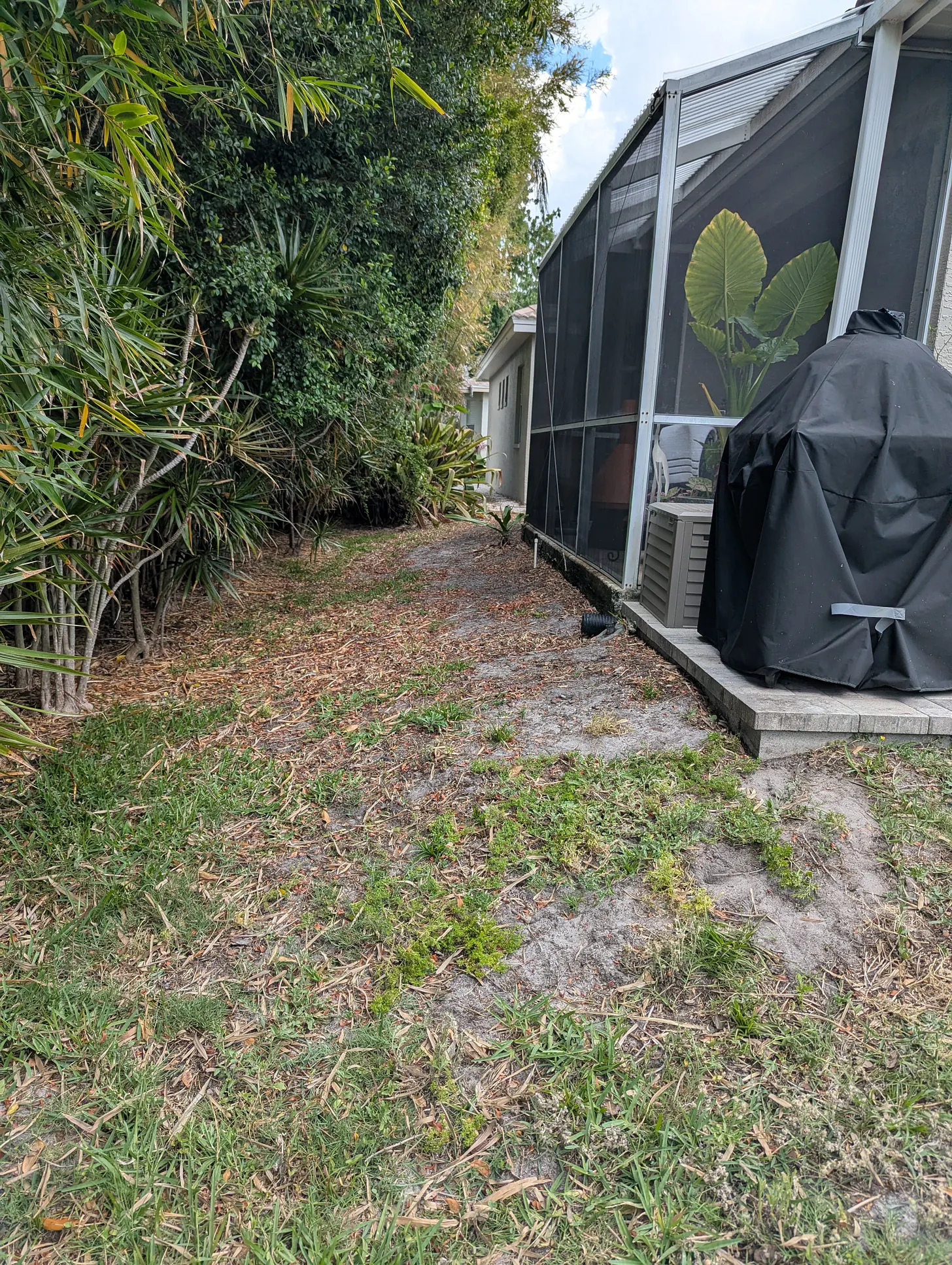
First step was to diagnose why the die off occurred back there in the first place. It was partially blocked by nearby tree growth so only received perhaps 4-5 hours of sun a day, too shaded for most Florida grasses. However to fully understand we had to do a full soil panel to uncover some of our core statistics we use.
Major causes of stress were first the compacted soil and hardpan layer. The first 3 inches were around 200psi, almost twice ideal. Then just beyond that was a 250-300psi hardpan layer that made the roots struggle to expand deeper and establish.
As for nutrients, the soils EC or Electrical Conductivity was quite good for most urban soils. It had a value that stood roughly around .65-.75 μS/cm. This measures a slight electrical charge within the soil that is actually produced from single celled organisms during their process of cellular respiration. Measuring so allows me to get a judgement on the biological activity within the soil. So the soil was biologically active and had a bacterial dominance, we tested its fungal to bacterial ratio which turned out to be 7% fungal and 93% bacterial.
What did stand out as a problem for nutrients was that Sulfur, Magnesium and Phosphorus were all at significantly higher levels than ideal. These would have caused problems within the soil environment in abundance and an increase in fungal growth may help control the excess Phosphorus.
So our plan to transform the environment was to first till out that hardpan layer preventing growth, next add a layer of balanced topsoil throughout to reduce the excessive nutrient levels and also address the exposed foundation.
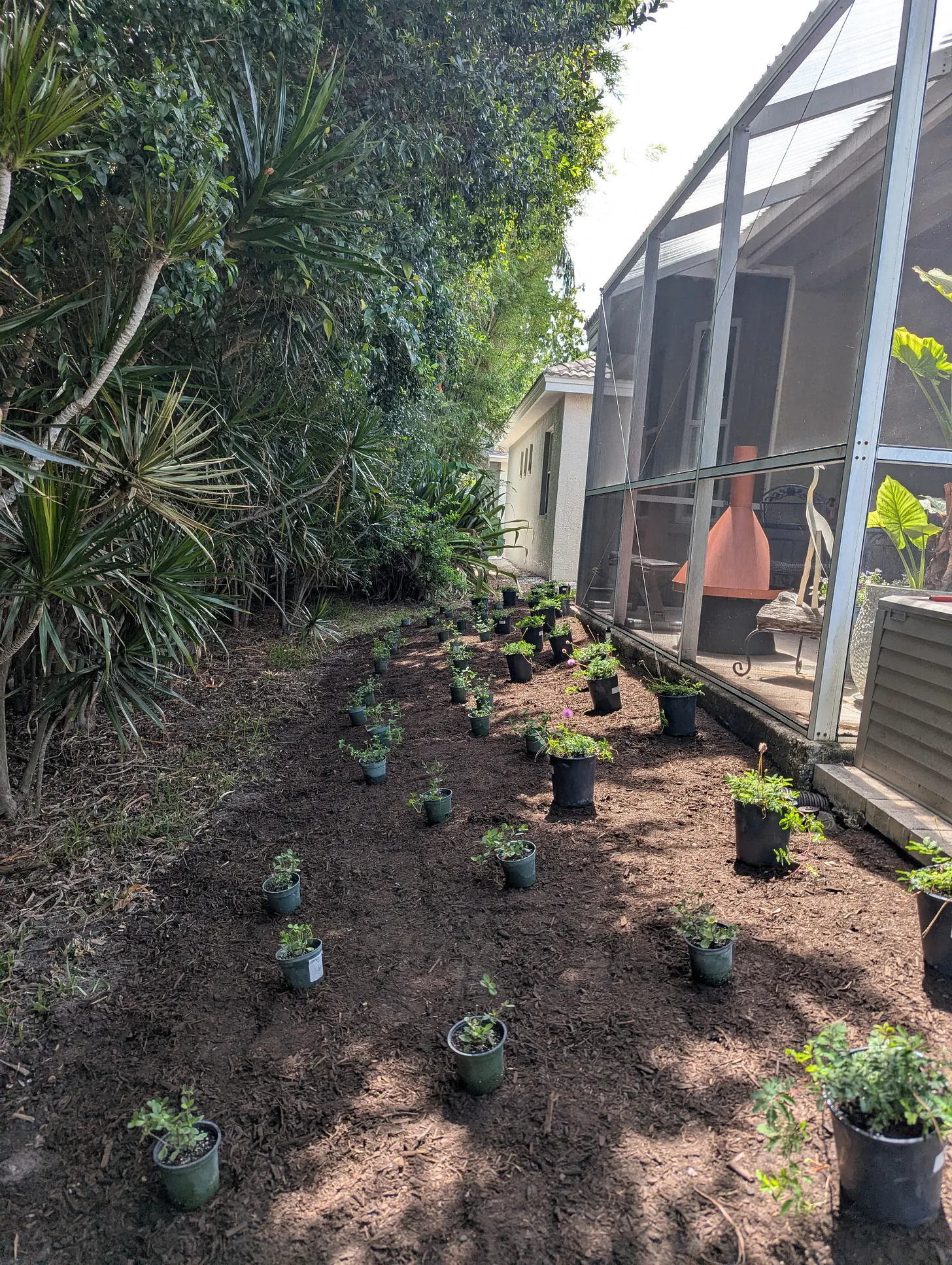
After that we needed to install some plants to establish a root network that actually holds that soil and slope together, slowing down any further erosion in the future. To be fitting to our Florida environment and wanting local pollinators we planted an arrangement of Sunshine Mimosa and Frog fruit. The Mimosa can spread out covering almost 100sqft. And each Frog fruit can be 3-4 ft wide.
These will grow into a dense ground cover able to outcompete with local weeds and also attract a variety of wildlife. Some added bonuses are their lack of needing to be mowed and drought tolerant behaviors too!
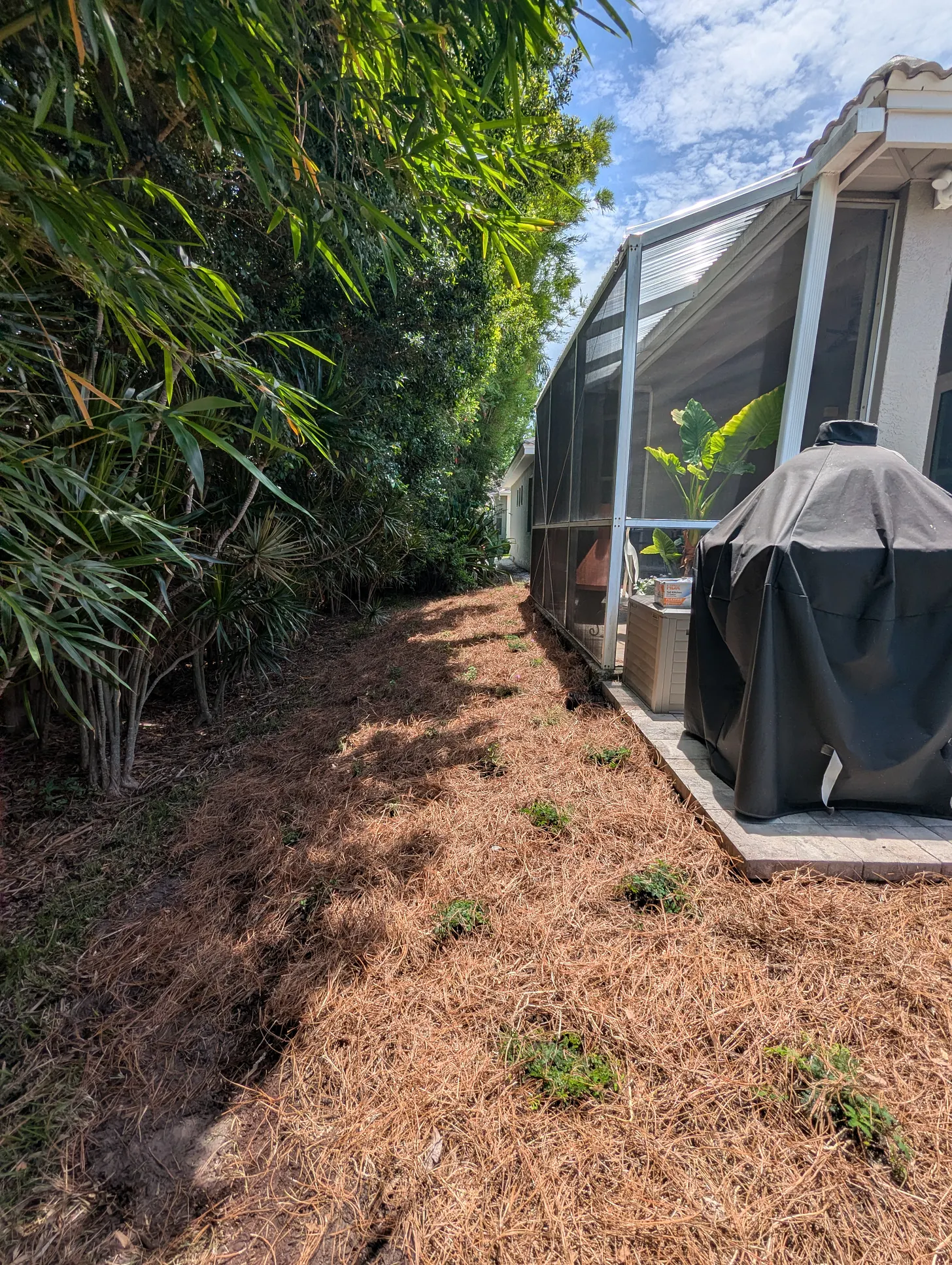
As a finishing touch we laid down pine straw between the plants, to further protect from heat and soil evaporation and also covering up any bare areas that may prevent weed growth. The only thing we want growing are the flowers we just planted. At the end this backyard strip was transformed from a bare area to a pollinator friendly and erosion resistant design!